
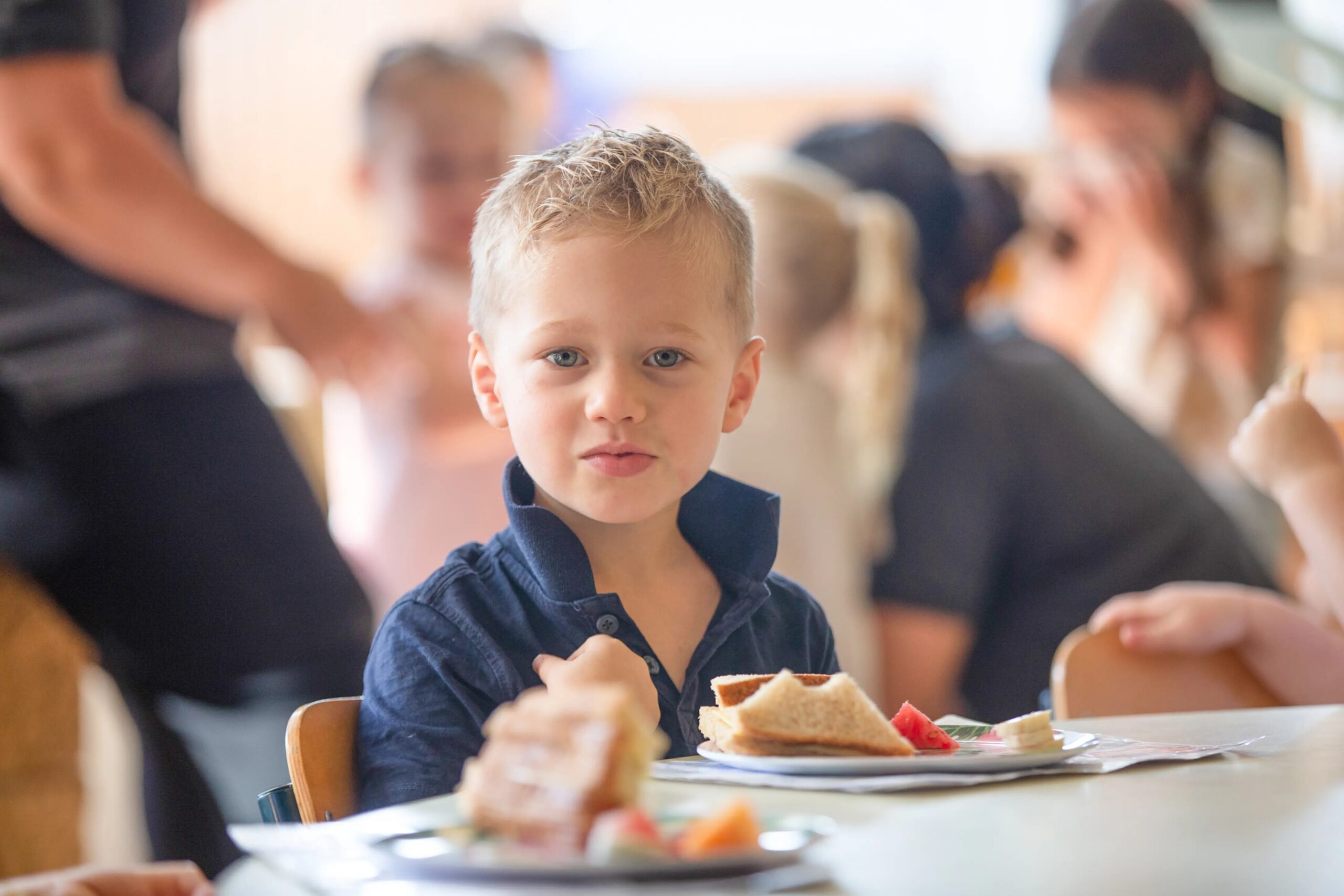

"Finish your plate" is one of the most common things siad to children at mealtimes. Emerging evidence, and long-standing early childhood practice, suggests otherwise.
As families across Australia notice mealtime routines shift with the change in season, and with National Nutrition Week (12-18 October) putting a national focus this year on positive, strengths-based food experiences for children, it's a timely moment to look at what actually works at the table, and why pressure-free mealtimes are standard practice across our network of centres.
What the evidence says
According to Raising Children Network, children's willingness to try and enjoy food depends heavily on the eating environment. Calm, low-pressure mealtimes support better outcomes than pressure, bribery or insistence, both of which are associated with children becoming more resistant to food over time.
There's a developmental logic here, too. Deciding what and how much to eat is one of the earliest ways children exercise autonomy. Appetite also fluctuates naturally, shaped by growth, activity and energy needs, meaning day-to-day variation in how much a child eats is expected, not a cause for concern.
How this plays out across our centres
Across our network, educators are trained to treat mealtimes as an extension of each centre's curriculum approach, not a pause from it. In practice, this means:
- Food is offered without pressure to finish it, supporting children to recognise and act on their own hunger and fullness cues
- Children are encouraged to serve themselves where appropriate, building independence and confidence
- Group, family-style mealtimes are prioritised to make eating a social, calm experience
- Educators model enjoyment of food, rather than commenting on what or how much a child eats
This approach is consistent with the Positive Food Experiences focus that National Nutrition Week is spotlighting this year, and it reflects an evidence base that's been well established in child development and nutrition research for some time.
Spring menu: the same principles, in practice
Our new Spring menu, developed in partnership with nutrition experts The Biting Truth and Woolworths@Work, was designed with this same philosophy in mind. Several dishes, including our Build Your Own Burrito Bowls, are structured around choice, allowing children to select their own components and build their own plate.
Every dish continues to meet the nutritional standards required to support growth, energy and development in the under-5s age group. The flexibility is in portion and preference, not in nutritional quality.
What this means for families
If mealtimes at home have felt like a battleground, the evidence points to easing off rather than pushing harder:
- Offer food without commentary on how much is eaten
- Let children serve themselves, even when portions look unusual
- Continue reintroducing foods that have previously been refused - familiarity often builds gradually, over multiple exposures
- Assess intake across several days rather than a single meal
Families wanting to explore this further with their child's specific routine are encouraged to speak with their centre's educators, who can share what they're observing day to day.